Partnership for Food Safety Education

FightBAC!

  • Food Safety Basics
    • Four Food Safety Practices
    • Featured Resources
  • Food Poisoning
    • About Foodborne Illness
    • Foodborne Pathogens
    • Causes & Symptoms
    • Food Safety Glossary
  • Food Safety Education
    • National Food Safety Month
    • Safe Flour Handling
    • The Story of Your Dinner
    • Food Safety Mythbusters
    • Safe Poultry Handling
    • Prep Yourself: Delivery Food Is on the Way
    • Safe Produce
    • Recall Basics
    • Go 40 or Below
    • Quick Guide to Cooking Temperatures
    • Safety in All Seasons
  • K-12 Education
    • Curricula & Programs
      • Grades K – 3
      • Grades 3 – 5
      • Grades 4 – 8
      • Grades 9 – 12
    • Hands On
    • Kids Games & Activities
    • School Lunches
  • Child Care
    • Babies & Toddlers
    • Child Care Training
    • Kids Games & Activities
  • Safe Recipes
    • Safe Recipe Style Guide
    • Safe Recipe Activity for Middle School
    • Cookbooks
    • Appetizers
    • Side Dishes
    • Entrees
    • Desserts
  • Free Resources
    • Recorded Webinars
    • World Food Safety Day
    • Global Handwashing Day
    • Recursos en español
    • Coronavirus Resources
    • Evaluation Toolkit
  • About Us
    • Who We Are
    • Board of Directors
    • Who Is Involved
    • PFSE Staff
    • Brand Assets
    • BAC Fighter Ambassadors
    • Job Openings
    • Contact Us
  • Get Involved
  • Events
    • Upcoming Events
    • 2025 Conference
    • CFSEC 2026
  • News & Blogs

Spring Forward with Food Safety

March 26, 2024

Many of this season’s celebrations involve perishable foods like eggs, beef, ham and lamb. These foods need to be handled properly at home to prevent food poisoning.

Safe Egg Handling

Eggs are a big part of many spring celebrations and activities. Kids love to decorate and dye them, hide them, and cook them with their families in festive foods.

Follow these eggs-pert food safety tips with kids and families to keep them safe this spring season:

  • Wash hands with soap and water before preparing food and after handling raw eggs.
  • Prevent cross-contamination. Wash cutting boards, counters, utensils, and serving plates after touching raw eggs, meat, poultry, and seafood.
  • Remember the two-hour rule. Don’t leave eggs out at room temperature for more than two hours.
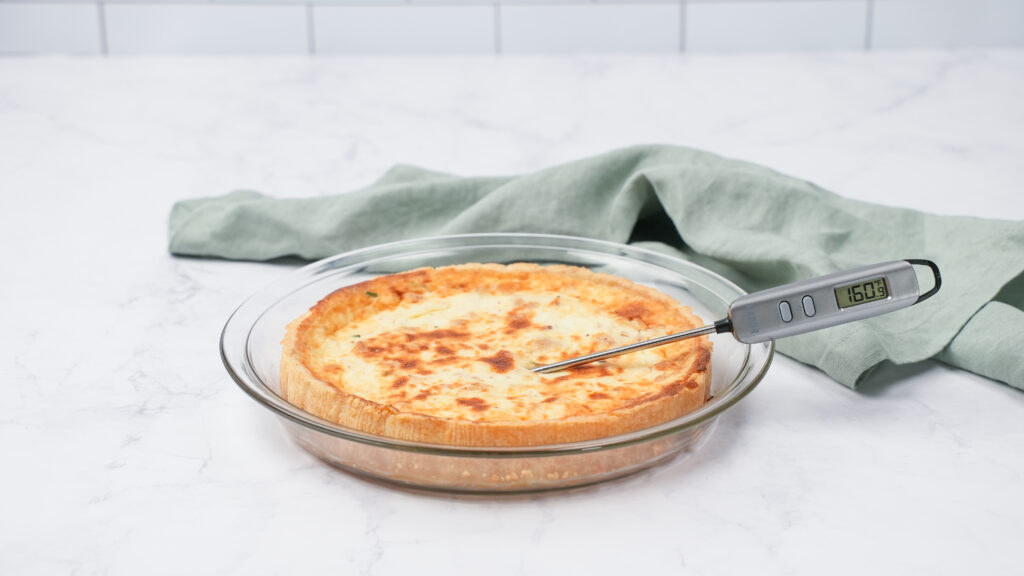
  • Cook eggs and dishes containing eggs until the internal temperature reaches 160° F on a food thermometer.
  • For egg hunts and other activities, only use eggs that have been refrigerated. Discard eggs that are cracked, dirty, or have been out at room temperature for more than 2 hours.


Get more safe egg handling advice to keep you and your young ones healthy this season.

Handle & Cook Meats Safely

The meat is the centerpiece of any holiday meal. Make sure yours is a showstopper by handling and cooking it safely:

  • Wash hands with soap and water before preparing food and after handling raw meat and poultry.
  • Cook ham until the internal temperature of 145 °F on a food thermometer with a three-minute “rest time” after removal from the heat source.
  • Bake beef brisket, fat side up in a baking dish, in an oven set no lower than 325 °F. The brisket is safe to eat when it reaches an internal temperature of 145 °F on a food thermometer with a three-minute “rest time” after removal from the heat source.
  • Cook all raw lamb steaks, chops, and roasts to a minimum internal temperature of 145 °F on a food thermometer with a three-minute “rest time” after removal from the heat source.


Spring Clean Your Way to a Safer Kitchen

It’s important to know the difference between cleaning and sanitizing. They aren’t the same thing. Both are important to help prevent the spread of harmful germs.

  • Cleaning removes germs, dirt, and impurities from surfaces or objects. Cleaning works by using soap (or detergent) and water to physically remove germs from surfaces. This process does not necessarily kill germs, but by removing them, it lowers their numbers and the risk of spreading infection.
  • Sanitizing lowers the number of germs on surfaces or objects. This process works by disinfecting surfaces or objects using a diluted liquid chlorine bleach solution (combine 1 tablespoon liquid chlorine bleach with 1 gallon of water in a clean bucket).


Learn more about when to clean and when to sanitize at home.

Follow these food safety tips to help your family and friends have an egg-cellent spring celebration!

Filed Under: Blog Tagged With: BAC Fighter, children, Easter, Easter eggs, Easter food safety, Easter ham, Easter meal, Fight BAC, Food handling, food safety, Food safety education, Food safety resources, foodborne illness, prevent foodborne illness, spring, spring celebration, Spring celebrations, spring food safety

Partnership for Food Safety Education Grows with New Board Members, Partners

March 5, 2024

The Partnership for Food Safety Education (PFSE) announces several appointments to its Board of Directors. PFSE is a non-profit, public health organization that develops and promotes education programs to reduce foodborne illness risk for consumers.

The Partnership appointed four new board members:

  • Jane DeMarchi, president of the North American Millers’ Association
  • Stefanie Evans, Ph.D., vice president of quality and food safety sourcing and design at Danone North America
  • H. Lester Schonberger, Ph.D., associate extension specialist with Virginia Tech/Virginia Cooperative Extension
  • Sharon Mayl, partner at DLA Piper, appointed as board advisor


“We’re so happy to welcome our new board members,” said Harold Chase, PFSE board chair and director of government affairs with NSF. “Our talented Board of Directors is dedicated to stewarding PFSE to be effective at helping people reduce their risk of foodborne illness at home.”

Rotating off the board are Michael Roberson, director of corporate quality assurance with Publix Super Markets and past board chair, as well as Shauna C. Henley, Ph.D., family and consumer sciences educator at University of Maryland Extension. The Partnership is grateful for their dedication to food safety education and servant leadership.

PFSE also welcomes six new contributing partners: Albertsons, Amazon, Diversey, Home Chef, JBS and SmartLabel by Consumer Brands Association. Contributing partners help to keep food safety education resources free to access and provide thought leadership to program development and strategy.

“The Partnership’s historical leadership in public-private collaboration is unique and important to making an impact on foodborne illnesses,” said Britanny Saunier, PFSE executive director. “We’re grateful to have the thought leadership of our Board of Directors, contributing partners, federal liaisons and food safety educators to advance awareness of safe food handling practices for people preparing meals at home.”

View the full list of PFSE Board of Directors and the partner organizations who support this work.

About the Partnership for Food Safety Education
The Partnership for Food Safety Education (PFSE) is a non-profit, public health organization with a mission to develop and promote effective education programs to reduce foodborne illness risk for consumers. This important work is done through a historically significant cross-sector collaboration with the federal government, food industry, consumer groups, and scientific associations. PFSE supports more than 13,000 health and food safety educators with free, science-based safe food handling messages who reach 8.5 million U.S. households each year. Food safety professionals, health educators, and consumers can download free food safety education information from the Partnership’s website at fightbac.org.

Filed Under: Blog Tagged With: board of directors, Fight BAC, Food handling, food safety, Food safety resources, foodborne illness, non-profit, non-profit news, nonprofit, nonprofit news, Poultry

Celebrating Black History Month

February 2, 2024

Black History Month is a time to acknowledge the outstanding achievements of Black Americans and honor their pivotal role in shaping U.S. history.

In celebration of Black History Month, the Partnership will be highlighting some favorite foods of these past and present leaders.

Dr. Martin Luther King Jr.

“Dr. Martin Luther King Jr.’s Table: Breaking Bread in Troubled Times” (The National Gallery of Art)

President Barack & Michelle Obama

Learn more about President Barack and Michelle Obama online at their official website.

Frederick Douglass, Harriet Tubman & George Washington Carver

  • Frederick Douglass
  • Harriet Tubman
  • George Washington Carver

Filed Under: Blog Tagged With: Black History Month, BLM, civil rights, civil rights leaders, Dr. Martin Luther King Jr, food poisoning, food safety, Food safety education, foodborne illness, Home food safety, Martin Luther King, Martin Luther King Jr, MLK

Food Safety During Severe Weather

January 9, 2024

During a power outage, the clock starts ticking on the safety of your perishable foods. If you are aware of an approaching storm, tornado, hurricane or high electricity use, you can be prepared.

Before the Storm

  • If you can prepare in advance, make sure you are using appliance thermometers in your fridge and freezer.
  • Have a cooler or two at the ready, filled with ice or several frozen gel packs.
  • Research where dry ice or block ice are available near you.


During the Storm

  • Once the power goes out, be mindful of time and temperature.
  • Keep the refrigerator and freezer doors closed.
  • Your refrigerator will hold a safe temperature for about four hours.
  • Your freezer, if packed full, will hold food at a safe temperature for about 48 hours with no power — at half full, the time decreases to 24 hours.
  • Food is safe to refreeze if it still has ice crystals or if the freezer did not rise above 40 °F.


After the Storm

  • When the power is back on, check the temperature inside your freezer and refrigerator by looking at the thermometer.
  • If the temperature is still 0 ⁰F or below for freezer and 40 ⁰F or below for refrigerator, your food should be fine.
  • NEVER taste food to determine its safety.
  • The following foods are safe if held above 40 ⁰F for more than 2 hours: hard cheeses, grated Parmesan cheese, butter or margarine, opened fruit juices, jelly, relish, taco sauce, mustard, ketchup, olives, pickles, and Worcestershire, soy, barbecue and Hoisin sauces, peanut better, opened vinegar-based dressing, bread products, breakfast breads, fruit pies, fresh mushrooms, herbs, spices, uncut raw vegetables and fruit.
  • What you should throw out: meat, poultry or seafood products; soft cheeses and shredded cheeses; milk, cream, yogurt, and other dairy products; opened baby formula; eggs and egg products; dough, cooked pasta; cooked or cut produce.


After a Flood

  • Do not eat any food that may have touched flood water.
  • Discard food that is not in waterproof containers; screw-caps, snap lids, pull tops, and crimped tops are not waterproof.
  • Discard cardboard juice/milk/baby formula boxes and home-canned foods.
  • Discard any damaged cans that have swelling, leakage, punctures, holes, fractures, extensive deep rusting, or crushing/denting severe enough to prevent normal stacking or opening.
  • Mix a sanitizing solution of 1 Tablespoon of unscented bleach with one gallon of water to disinfect pots, pans, dishes, utensils, and undamaged all-metal cans after removing the label. Relabel with a permanent marker.


Preparing for disasters in advance is helpful to provide peace of mind. Knowing how to manage our food supply before, during and after a disaster will be essential to living.

For more information contact your local extension office or check out PFSE resources.

 ** Reprinted from Idaho State Journal. **

Filed Under: Blog Tagged With: Fight BAC, food poisoning, food safety, Food safety education, foodborne illness, power outage, power outages, storms, Winter, winter storms

Hot Off the Grill: Home Grilling Safety Tips

May 11, 2020

Families are doing more grilling this year. Nielsen reported that fresh meat alternative sales increased 255% in the last week of March (compared to the same week in 2019), fully outpacing the growth of meat sales, which increased 53% over the same period.

Fight BAC! is here to help you out with a few essential tips on handling meat safely, and how grilling safely at home can keep you and your family healthy.

Clean hands & surfaces

Washing your hands and surfaces the correct way will help reduce the risk of harmful germs:

  • Wash your hands with warm water and soap for at least 20 seconds before and after handling food.
  • Wash your cutting boards, dishes, utensils, and counter tops with hot soapy water after preparing each food item and before you go on to the next food.
  • Do not rinse raw meat or poultry before cooking it. This is not a safety step, and it could spread dangerous germs around your kitchen.


Thawing meat

woman and daughter washing at kitchen sinkYou may be buying more meats in bulk right now and freezing for later use. Make sure to thaw meats properly:

  • Never let raw meat, poultry, eggs, cooked food or cut fresh fruits or vegetables sit at room temperature more than two hours before putting them in the refrigerator or freezer (one hour when the temperature is above 90°F).
  • Never thaw food at room temperature. Food must be kept at a safe temperature during thawing.
  • There are three safe ways to defrost food: in the refrigerator, in cold water, and in the microwave. Food thawed in cold water or in the microwave should be cooked immediately

Marinades

Everyone loves a good marinade! Make sure to safely marinate and store your meat:

  • Always marinate foods in the refrigerator, not on the counter or outdoors.
  • Don’t use sauce that was used to marinate raw meat or poultry on cooked food.
  • Reserve a portion of the unused marinade to use as a sauce.

Grilling temps

meat thermometer checking grilled meatWhen it’s time to grill the food, cook it to a safe internal temperature for safety and quality. Use a food thermometer to be sure! 

  • Beef, pork, veal and lamb (roast, steaks and chops): 145 °F with a three-minute “rest time” after removal from the heat source
  • Ground meats: 160 °F
  • Poultry (whole, parts or ground): 165 °F
  • Eggs and egg dishes: 160 °F, but cook eggs until both the yolk and the white are firm; scrambled eggs should not be runny
  • Fin fish: 145 °F
  • Shrimp, lobster and crabs: flesh pearly and opaque
  • Clams, oysters and mussels: shells open during cooking
  • Scallops: milky white, opaque and firm
Download the Safe Minimal Internal Temperatures Chart

Avoid cross-contamination

chicken and produce kept separate on counterCross-contamination is how harmful bacteria can be spread. Improper handling of raw meat, poultry or seafood can create an inviting environment for cross-contamination:

  • Never place cooked food on a plate that previously held raw meat, poultry or seafood.
  • Use one cutting board for fresh produce and a separate one for raw meat, poultry and seafood.
  • Be sure to have plenty of clean utensils and platters on hand.

Leftovers

After the meal, remember to handle leftovers safely to prevent foodborne illness:

  • Plan on enough storage space in the refrigerator and freezer. In the refrigerator, air needs to circulate to keep the temperature at 40 °F or below. Use an appliance thermometer in your refrigerator to monitor the temperature.
  • Divide large amounts of leftovers into shallow containers for quicker cooling in the refrigerator.
  • Leftovers stored in the refrigerator should be consumed within 3-4 days
  • Reheat leftovers to 165 °F before eating.

woman washing vegetables in kitchenTo help you Fight BAC!® (harmful bacteria) this grilling season, we’ve collected five grilling recipes with built-in food safety and hand hygiene steps.

Check out food safety videos on grilling and safe food preparation on the Food Safety YouTube channel.

Have a happy and safe grilling season!

Shawnte Loeri is the Communications Associate with the Partnership for Food Safety Education. She can be reached at sloeri@fightbac.org.

Filed Under: Blog Tagged With: BAC Fighter, Core Four Practices, Food handling, food poisoning, food safety, Food safety education, foodborne illness, fridge, grill, Grill Master, grilling, grilling season, grilling temperature, grilling temps, Handwashing, leftover, leftovers, marinade, marinades, marinate, meat, protein, summer, summer grilling, Summer picnic, thaw, thawing, thawing meat, wash hands

  • « Previous Page
  • 1
  • 2
  • 3
  • 4
  • 5
  • 6
  • …
  • 27
  • Next Page »

Copyright © 2026 · Partnership for Food Safety Education

Facebook X-twitter Pinterest Linkedin Instagram Youtube Youtube Envelope
Privacy Policy | Terms and Conditions | Disclaimer